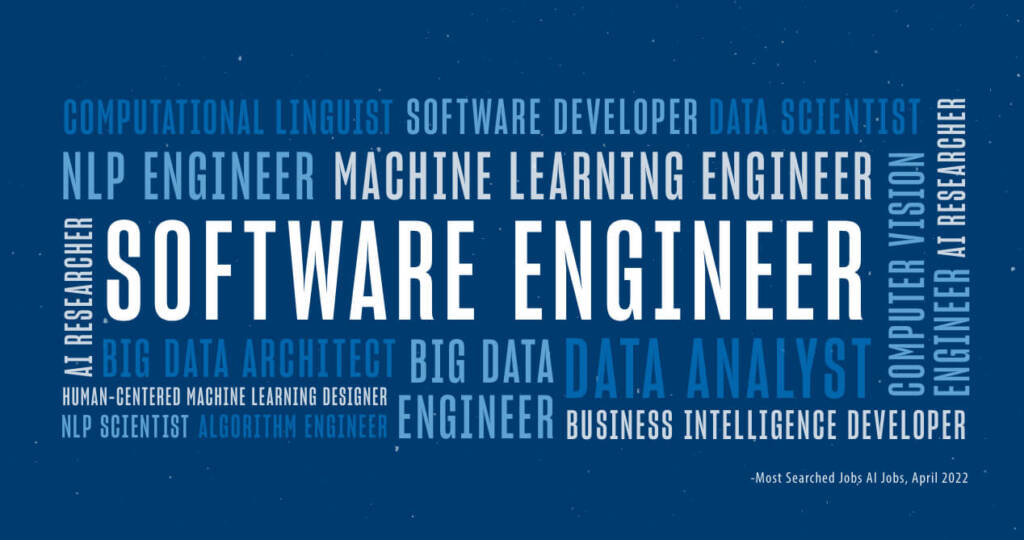
Artificial intelligence is changing how organizations hire, staff projects, and structure teams, and the effects are already visible in many industries. While some sectors have seen slower job growth as automation takes over routine tasks, demand is rising for people who understand how to not only work with AI systems but also support and use them to help solve practical problems. This shift is creating new opportunities for early-career professionals and career changers who want skills that stay valuable as AI becomes part of everyday work.
If you want to pursue one of those opportunities, you can begin even if you’re still in college or your current role has little to do with AI. The key is a focused plan that builds skills, proof of experience, and clarity about the kinds of roles you want to pursue. Use this five-step roadmap to learn how to start a career in AI with no experience and begin a path toward your first role.
Step 1. Build Foundational Skills
You don’t need to master every branch of math or computer science before you begin. What matters at this stage is learning enough to read, build and improve simple models. These early skills give you the base you’ll draw from as your work becomes more advanced.
Focus on four building blocks:
- Programming: Start with Python. Learn basic syntax, data structures and how to work in notebooks.
- Data handling: Practice cleaning datasets, joining tables and creating basic charts using AI tools such as spreadsheets, SQL or Python libraries.
- AI and machine learning concepts: Learn the differences between supervised and unsupervised learning, how models are trained and evaluated and where techniques like neural networks, computer vision and natural language processing fit.
- Mathematics: For many entry-level roles, comfort with algebra, statistics and basic probability is enough to start. You can add more calculus and linear algebra as you move into deeper technical work.
You can enter AI without a computer science degree. For many junior and analyst roles, teams focus on your ability to write basic code, work with data and explain your project work clearly. A small portfolio that shows steady progress often carries more weight than your major.
Once you can work with these fundamentals, you’ll be ready to choose the type of learning environment that will help you advance.
Step 2. Choose an Educational Path
After you’ve built early skills and understand the basics, the next step is deciding how you want to deepen your knowledge. You can continue learning informally, move into structured programs or pursue formal degrees, depending on your goals and preferred pace. Each option strengthens your foundation in a different way.
Option 1: Self-study and Certificates
Short online courses, coding bootcamps and introductory certificates can help you:
- Build momentum through structured lessons
- Stay accountable with weekly tasks or checkpoints
- Show employers that you’re actively developing your skills
Treat these options as supplements to hands-on work. Look for programs that require actual projects, not just quizzes or video lectures.
Option 2: Bachelor’s Degree in a Related Field
If you are early in your education, a bachelor’s degree in computer science, data science, statistics, engineering or another STEM field remains a strong on-ramp into AI. These programs provide broader theory, problem-solving practice and exposure to technical electives that can support more specialized roles.
Option 3: Master’s Degree for Applied and Leadership Roles
A graduate degree is helpful when you:
- Want to transition from a different field into AI
- Plan to work on complex systems or applied research
- Are preparing for technical leadership or roles with higher responsibility
- Prefer a structured environment with faculty guidance and peer collaboration
The University of San Diego’s online Master of Science in Applied Artificial Intelligence is a 30-unit, fully online program built for working professionals. Courses cover machine learning, deep learning, natural language processing, computer vision, data analytics with IoT and AI ethics. The program culminates in an applied capstone project that becomes a key piece of your portfolio.
Step 3. Gain Practical Experience
Once you understand the fundamentals, the next step is proving you can apply them. Employers want evidence that you can turn theory into working solutions. Even one small, well-documented project can set you apart from candidates who only list courses.
Here are practical ways to build experience:
- Personal projects: Pick a problem that interests you, such as predicting housing prices, classifying images or summarizing long documents. Keep the scope small and make sure the code runs clean in any coding-based projects.
- Portfolio-ready demos: For each project, share the problem, your approach, your results and what you might try next. A simple notebook, web app or short video walkthrough can go a long way. Host your work on a portfolio site or a well-organized GitHub profile so hiring managers and admissions committees can see your progress.
- Open-source contributions: Start with small tasks like fixing documentation, improving tests or reproducing results. These contributions show collaboration and familiarity with real codebases.
- Hackathons or short internships: Even a weekend event or part-time internship on an AI-adjacent team gives you practice working with others on real timelines and constraints.
Step 4. Prepare Your Materials & Network
With the right skills and projects in place, you can then shift to presenting your experience clearly and connecting with the right people.
Tailor Your Resume and Profiles
Use clear headings that match entry-level AI career paths, such as:
- Data analyst or AI data analyst
- Machine learning engineer (junior)
- Applied scientist or research assistant
- AI application developer or LLM app developer
- AI support or annotation specialist
Highlight tools, techniques and measurable outcomes for each project or role.
Refresh Your Online Presence
- Update LinkedIn with your AI projects, keywords and a concise headline.
- Add your portfolio link everywhere you apply.
- Briefly describe your career pivot or focus in your summary section.
Network With Intent
You do not need a huge network. Instead, aim for:
- A few online communities or local meetups focused on AI or data
- Occasional informational conversations with people in roles you are targeting
- Thoughtful questions and follow-up messages rather than mass outreach
Prepare for Conversations and Interviews
Practice explaining:
- One project in depth, including trade-offs and what you would improve
- How you learn new tools or concepts
- A time you handled uncertainty, debugging or incomplete data
This type of preparation can benefit you in both job interviews and conversations about graduate programs.
Step 5. Target Entry-Level Opportunities
With skills and a portfolio in place, start applying to roles that match your current level while stretching you slightly.
Common early-career roles include:
- Junior or associate data analyst
- AI or ML intern
- Entry-level machine learning engineer
- AI support, annotation or data labeling roles
- Research assistant or AI lab assistant
- Business analyst roles that use AI tools daily
These roles help you gain momentum and can lead to more advanced titles like AI engineer, applied scientist or MLOps engineer.
Where to Find Internships and Junior Roles
You can find opportunities in many places, but a focused approach helps. Consider the following resources:
- LinkedIn: Use filters such as “entry level,” “internship,” “artificial intelligence” and “machine learning,” then save searches and turn on alerts.
- General job boards (Indeed, Glassdoor, ZipRecruiter): Search for combinations such as “junior data scientist,” “AI analyst” or “machine learning intern” and set email updates.
- Tech and startup boards: Sites dedicated to tech or startup jobs often list AI-heavy roles that value portfolios and skills.
- University and professional networks: Career development centers, alumni groups and faculty networks can surface internships, projects or assistantships, especially if you are in a degree program.
Track your applications in a simple spreadsheet so you can follow up and refine your strategy over time.
Pitfalls to Avoid
As you move into AI, watch out for these common missteps:
- Tool-chasing without fundamentals: New frameworks and models appear constantly. If your core skills in programming, data and math are shaky, you will have trouble keeping up.
- Portfolios with no explanations: A recruiter or faculty reviewer should be able to see the problem, your approach and the impact in a few sentences, plus a link to a simple demo or notebook.
- Generic, non-targeted resumes: Sending the same resume to every posting usually leads to silence. Tailor your summary and bullet points to the language of each role.
- Ignoring ethics and privacy: Responsible AI is a major focus for employers and educators, including the MS in Applied Artificial Intelligence program, which weaves ethics and social good throughout its curriculum.
Popular Specializations
Once you have a foothold in AI, you can explore more focused areas, such as:
- Natural language processing (NLP): Building systems that understand and generate human language, from chatbots to text summarization
- Computer vision: Teaching models to interpret images and video for tasks like detection, classification and medical imaging
- GenAI and LLM applications: Creating products and workflows powered by large language models and other generative AI systems
- Machine learning engineering and MLOps: Turning models into reliable, monitored services that run in production
- Responsible and ethical AI: Focusing on fairness, transparency, governance and policy around AI systems
You do not need to pick a specialization immediately. Use early projects and roles to see which topics you enjoy most.