Key Takeaways
- Project management (PM) in health informatics bridges clinical necessity and technical execution, keeping health information technology (IT) initiatives on schedule and aligned with regulatory requirements.
- Effective PM spans six stages: planning, stakeholder engagement, implementation, compliance and data security, monitoring, and evaluation.
- Certifications like Project Management Professional (PMP) and Certified Health Informatics Systems Professional (CHISP) build credibility, but a graduate degree offers deeper leadership preparation.
- USD’s Master of Science in Health Care Informatics develops PM skills through a capstone course where students apply informatics to real health care challenges and evaluate health IT systems.
Healthcare organizations increasingly rely on complex health IT systems to deliver quality care. This reliance has turned project management (PM) into a critical skill in the healthcare field. Informatics professionals, particularly those with a health informatics background, play an important role in guiding projects, coordinating stakeholders, and ensuring technology aligns with clinical and operational goals. They bridge the gap between clinical necessity and technical execution.
Strong project management not only drives the successful implementation of health IT initiatives but also enables healthcare organizations to adapt to evolving technologies and regulatory requirements.
This guide explores what project management looks like in health informatics, the value it brings, and the way certifications or advanced degrees can strengthen your expertise.
What Is Project Management in Healthcare Informatics?
In the context of health informatics, project management is the application of specialized tools and methodologies to plan, execute, and oversee IT solutions. In any health project, applying project management effectively helps ensure that critical tasks are completed on schedule and within budget.
Unlike general PM, healthcare project management requires a deep understanding of clinical workflows. Projects include:
- Implementing clinical and operational technology solutions
- Optimizing workflows and system interoperability
- Introducing telehealth and digital health platforms
- Leveraging data analytics, artificial intelligence (AI), and machine learning to inform decisions
- Coordinating multi-team efforts to meet deadlines and budgets
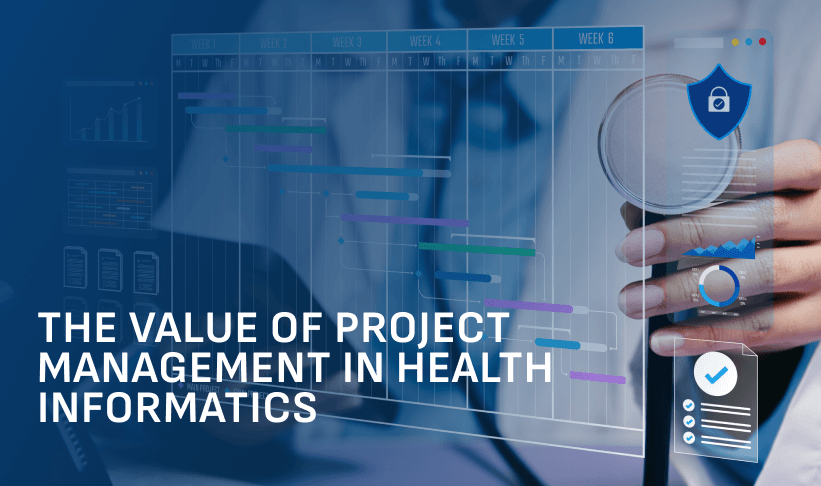
The Value of Project Management in Health Informatics
Effective project management is essential in any organization, but in a high-stakes clinical environment like healthcare, it’s especially critical. Health environments handle vast amounts of data, a variety of complicated technologies, fast-paced workflows, and multiple moving parts that must all work together seamlessly.
In practice, project management in health informatics can:
- Keep projects on schedule and on budget: Ensure timelines, technical, and administrative staff stay on track.
- Coordinate cross-functional teams: Align clinical, technical, and administrative staff while making strategic decisions about where time, personnel, and funding are allocated.
- Simplify complicated workflows: Break large initiatives into manageable, actionable steps.
- Ensure regulatory compliance and data security: Maintain adherence to HIPAA, HITECH, and organizational policies.
- Promote user adoption: Guide staff through training and communication to embrace new systems.
- Support patient safety: Help implement systems that reduce errors, improve clinical decision-making, and ensure accurate, accessible patient data.
- Guide organizational change: Support smooth transitions during cultural and operational shifts, ensuring that new tools simplify workflows rather than add unnecessary complexity.
- Enhance outcomes: Improve patient care, operational efficiency, and data-informed decision-making.
RELATED: How Health Informatics Is Shaping the Future of Health Information Management
Stages of Health Informatics Project Management
Successful project management in health informatics projects involves many important components, each with specific responsibilities. These typically include:
- Planning and initiation: Define the project’s goals and scope, identify the resources needed, and assess potential risks.
- Stakeholder engagement: Every project includes stakeholders, ranging from executive leadership to systems-level managers. While some may have a more direct role in the project than others, it is important to identify all stakeholders and understand their interests, influence, and responsibilities.
- Implementation and execution: How you implement and execute a project can make or break its success. This includes guiding teams through technology-driven initiatives or projects, workflow integration, training, and support.
- Compliance and data security: Healthcare projects involve large amounts of personal information, making compliance with data security regulations critical, especially given the rising number of cyberattacks targeting the healthcare sector. Ensuring regulatory adherence includes following privacy laws, preparing the organization for audits, implementing security measures, maintaining proper documentation, and monitoring data handling practices throughout the project.
- Monitoring and control: A health informatics project is not complete once it is executed. This important aspect involves monitoring progress; measuring timelines, deliverables, and outcomes; performing quality assurance; and managing changes to ensure the project stays on track and meets its objectives.
- Evaluation and closure: This phase involves assessing the project’s outcomes, optimizing processes post-implementation, providing ongoing support, and documenting lessons learned to facilitate knowledge sharing.
How Certifications Can Strengthen Your Project Management Skills
Earning project management certifications is a powerful way to build expertise, demonstrate credibility, and add value to your career. Certifications provide structured training, expose you to industry best practices, and equip you with the tools and knowledge to manage complex projects effectively.
Relevant project management certifications include:
- Project Management Professional (PMP®)
- Certified Project Manager (IAPM)
- Certified Six Sigma Black Belt (CSSBB)
- Certified Health Informatics Systems Professional (CHISP®)
- Certified ScrumMaster® (CSM®)
- Projects in Controlled Environments (PRINCE2)
- CompTIA Project+
- Certified Associate in Project Management (CAPM)
RELATED: Do You Need to Be Certified in Health Informatics?
How a Master’s in Health Care Informatics Builds Essential Project Management Skills
While certifications can be valuable, a graduate degree in health informatics gives professionals the deeper knowledge and skills needed for leadership. This level of education prepares students for roles in project management and other leadership positions within a rapidly growing field.
The University of San Diego’s Master of Science in Health Care Informatics develops these skills through coursework in project management, health IT, and analytics; hands-on learning opportunities; and guidance from experienced faculty who prepare students to lead health IT initiatives.
The program culminates in a capstone course, where students apply health informatics to real healthcare challenges, evaluate health IT systems, and understand the role of stakeholders. Through this process, students complete a capstone project, create a reflective ePortfolio, and explore current issues in healthcare technology and data management.
FAQs
What types of projects do health informatics professionals typically oversee?
Health informatics professionals are often involved in implementing clinical technology, optimizing workflows, launching telehealth or digital health platforms, applying AI or analytics, and coordinating multi-team initiatives.
Do you need prior healthcare experience to work in project management for health informatics?
While prior healthcare experience helps, professionals with strong project management skills, certifications, or an advanced degree in health informatics can also succeed in these roles. Some positions, particularly those within clinical informatics, may require healthcare experience and professional licensure.
What are some common health informatics roles, and what can I expect to earn?
Job titles and salaries in health informatics vary depending on experience, education, and responsibilities, but many careers offer competitive pay and strong career growth. Common roles in health informatics include Health Informatics Specialist, Clinical Informatics Specialist, Healthcare IT Project Manager, Director of Clinical Informatics, and Nurse Informaticist. Salaries in health informatics typically range from around $50,000 or $60,000 for entry-level positions to over $130,000 for senior-level roles, with higher earnings often linked to advanced degrees and specialized experience.
How can a master’s degree in healthcare informatics support project management expertise?
Advanced degrees, such as USD’s Master of Science in Health Care Informatics, provide coursework, hands-on learning, and faculty guidance specifically in project management, health IT, and analytics.
Do I need a project management or informatics certification to work in healthcare informatics?
Certifications are not always required, but they can significantly enhance your knowledge, credibility, and career opportunities. Project management certifications, such as PMP or CAPM, and health informatics certifications, like the Certified Health Informatics Systems Professional (CHISP®), provide structured training in best practices and current industry guidance, which demonstrates to employers that you’re committed to professional growth.