
Throughout history, engineering has been a driving force behind human progress. Today, the need for strong engineering leadership is greater than ever. As industries confront increasingly complex global challenges, from climate resilience and AI ethics to large-scale infrastructure demands, engineers are being called to guide and build solutions. Emerging technologies, rapid innovation cycles and cross-disciplinary communication are all part of the job, and it takes a skilled leader to manage the moving parts.
What does effective engineering leadership entail? To get a better idea, this post takes a closer look at some examples of history’s most exceptional engineering leaders, highlighting the pioneering individuals who shaped the foundations of and continue to contribute to modern engineering.
What Is Engineering Leadership?
While managing projects and overseeing technical teams is a core component of engineering leadership roles, these responsibilities only scratch the surface of what leadership in engineering is all about. Digging deeper, leadership means guiding complex technical environments while also creating the conditions where others can thrive. It’s about shaping the future of the field and empowering the people who work within it.
Unlike traditional management, engineering leadership blends strategic thinking with deep technical knowledge. Effective leaders don’t only solve today’s engineering problems, they also design systems, teams and processes that anticipate future challenges.
Impactful engineering leaders possess several key traits:
- Systems thinking: The ability to see the bigger picture, understanding how components interact and make decisions that optimize the entire system, versus parts of it.
- Communication and collaboration: Explaining complex ideas clearly, bridging gaps between technical and non-technical stakeholders and encouraging positive team dynamics.
- Ethical decision-making: Considering long-term impacts, ensuring responsible use of technology and making choices that prioritize safety, fairness and sustainability.
- Empowering others: Creating an environment that supports innovation, encourages learning and helps team members develop their own leadership potential.
12 Examples of Great Engineering Leaders
Throughout history, engineers have pushed boundaries, reimagined what’s possible and helped society solve complicated problems. The following leaders, spanning ancient history to today’s tech innovators, embody the qualities that characterize great engineering leadership.
1. Archimedes (287–212 BC)
“Give me a place to stand, and I shall move the earth.”
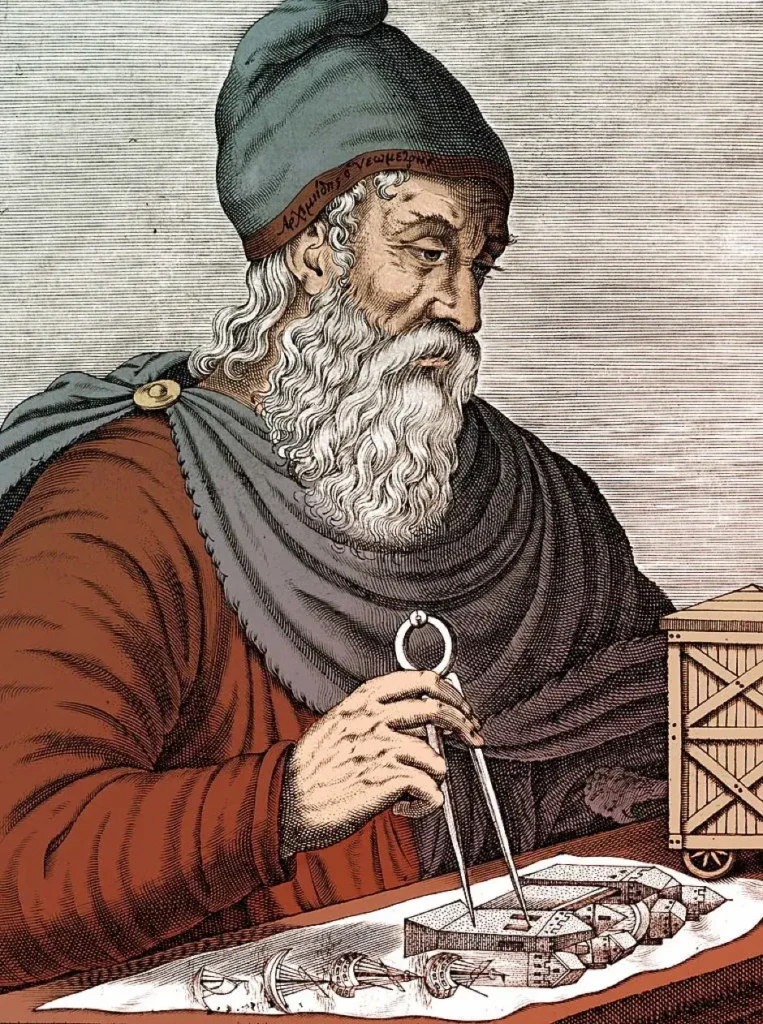
Often credited as one of the world’s first great engineers, Archimedes was a brilliant thinker who applied mathematics to practical invention. Born in Syracuse in 287 BC, he became one of the most influential scientists of the ancient world, anticipating ideas that wouldn’t be formally developed until the invention of modern calculus. Through the methods of infinitesimals and the exhaustion, he proved formulas for the area of a circle, the volume of a sphere, the area under a parabola and more — principles still taught in mathematics classes today.
But Archimedes didn’t limit his brilliance to theory. He applied mathematics to real-world problems, pioneering principles in statistics and hydrostatics, such as the law of the lever and what we now call “Archimedes’ principle of buoyancy.” Other accomplishments include building an early mechanical planetarium; measuring the apparent size of the sun; and designing machines such as the Archimedean screw, compound pulleys and even defensive devices used during the Siege of Syracuse.
2. Isambard Kingdom Brunel (1806–1859)
“I am opposed to the laying down of rules or conditions to be observed in the construction of bridges lest the progress of improvement tomorrow might be embarrassed or shackled by recording or registering as law the prejudices or errors of today.”
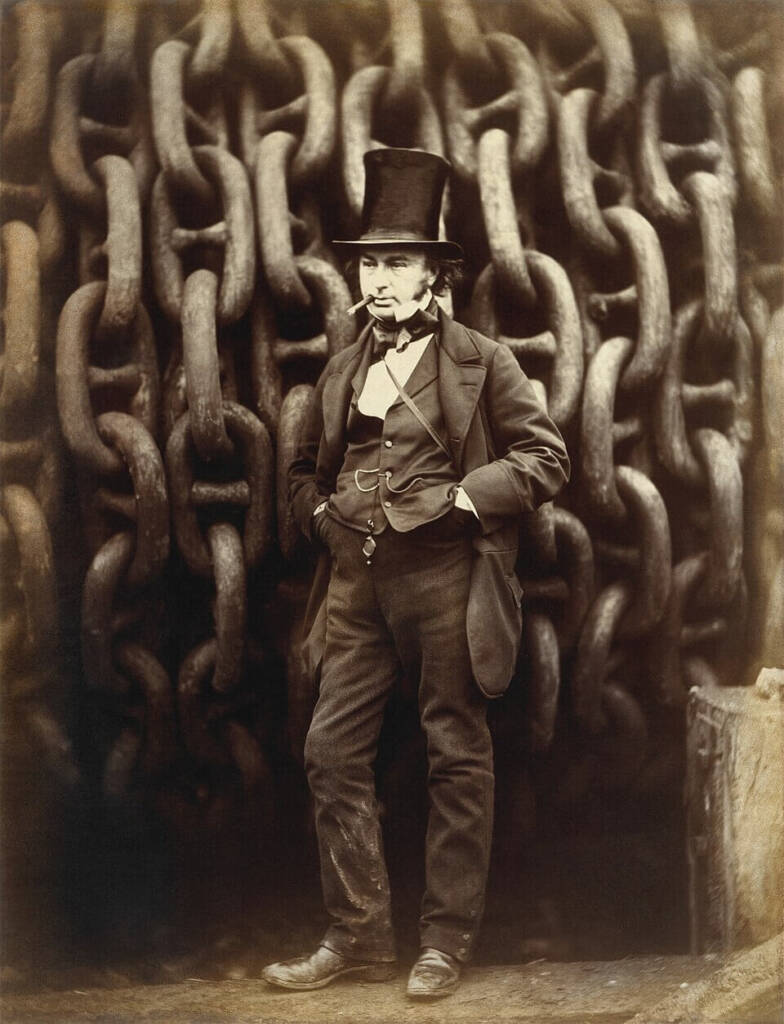
Isamabard Kingdom Brunel was one of the great engineering minds of the Industrial Revolution and a bold thinker whose designs transformed transportation and reshaped Britain’s landscape. Trained as both a civil and mechanical engineer, he helped build the first tunnel under a navigable river and also created some of the era’s most well-known bridges, viaducts and rail lines.
Brunel’s vision for the Great Western Railway set new standards for modern rail travel. His insistence on smooth, fast routes led to ambitious projects such as the two-mile Box Tunnel and a controversial broad-gauge track system. But his big thinking wasn’t limited to railways. Brunel also designed a series of groundbreaking steamships, including the SS Great Britain, the first iron-hulled propeller-driven ocean liner and the largest ship in the world when launched.
3. Alexander Graham Bell (1847–1922)
“Leave the beaten track occasionally and dive into the woods. You’ll be certain to find something you have never seen before.”
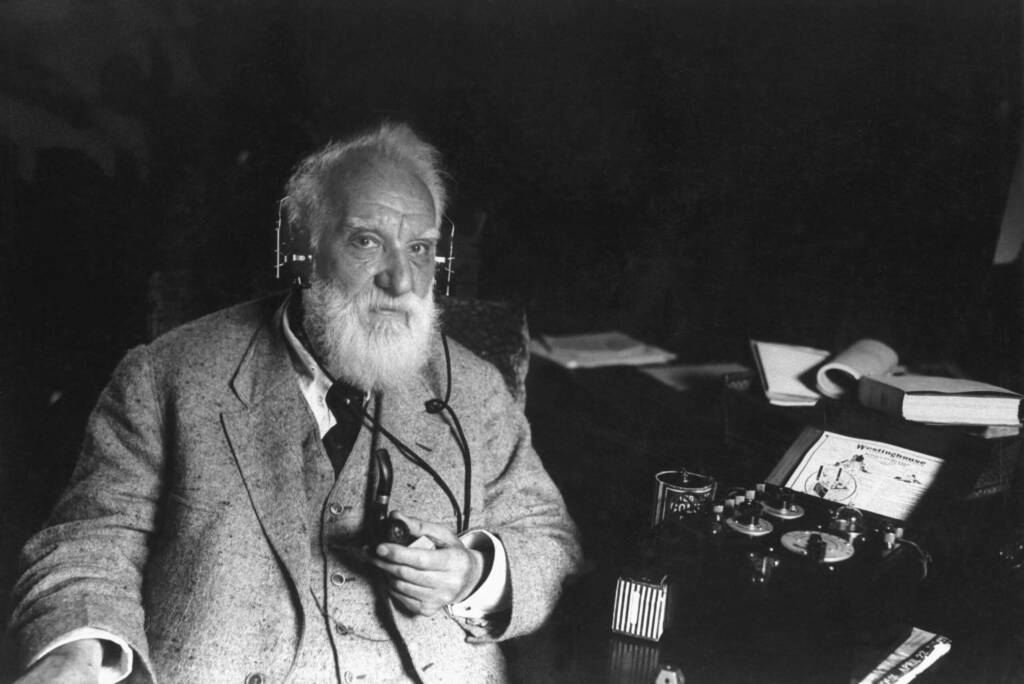
Alexander Graham Bell was a Scottish-born inventor and engineer best remembered for patenting the first telephone and co-founding AT&T. Deeply influenced by his family’s work in speech and elocution — and by his mother and wife, who were both deaf — Bell devoted his early career to understanding sound and communication. Those studies led to his landmark patent for the telephone.
Bell continued to innovate throughout his life, contributing to early developments in optical communication, hydrofoils and aeronautics. From 1898 to 1903, he also served as president of the National Geographic Society, helping shape its magazine into a major platform for science and exploration.
4. Nikola Tesla (1856–1943)
“The desire that guides me in all I do is the desire to harness the forces of nature to the service of mankind.”
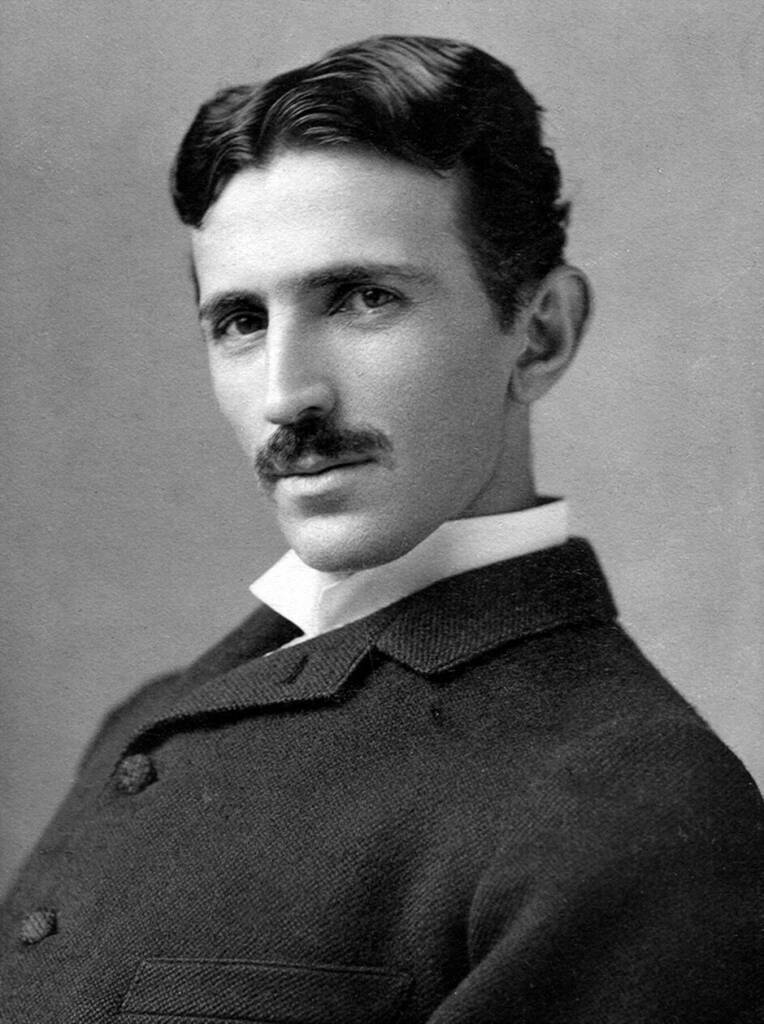
Nikola Tesla was a Serbian-American engineer, inventor and futurist whose ideas helped shape the modern electrical world. After emigrating to America in 1884, he briefly worked for Thomas Edison before launching his own ventures, where he developed a series of groundbreaking electrical devices.
His most influential contributions were his AC induction motor and polyphase AC system, technologies that became the backbone of modern power distribution. He is also credited with developing wireless lighting, early X-ray imaging, mechanical oscillators and one of the earliest radio-controlled machines.
5. Hedy Lamarr (1914–2000)

“Improving things comes naturally to me.”
While primarily remembered as a Hollywood actress, Hedy Lamarr’s most enduring legacy comes from her work as an inventor. At the beginning of World War II, she partnered with composer George Antheil to develop a “Secret Communication System” for Allied torpedoes. Their idea used spread-spectrum, frequency-hopping technology to prevent enemy radio jamming — an approach decades ahead of its time. Although the Navy didn’t adopt the technology during the war, the principles behind the invention later became foundational to modern secure wireless communication.
Variations of Lamarr’s concept would go on to underpin technologies such as Bluetooth and Wi-Fi, making her an unlikely but pivotal figure in the history of digital communication.
6. Grace Hopper (1906–1992)
“The most dangerous phrase in the language is: ‘We’ve always done it this way.’”
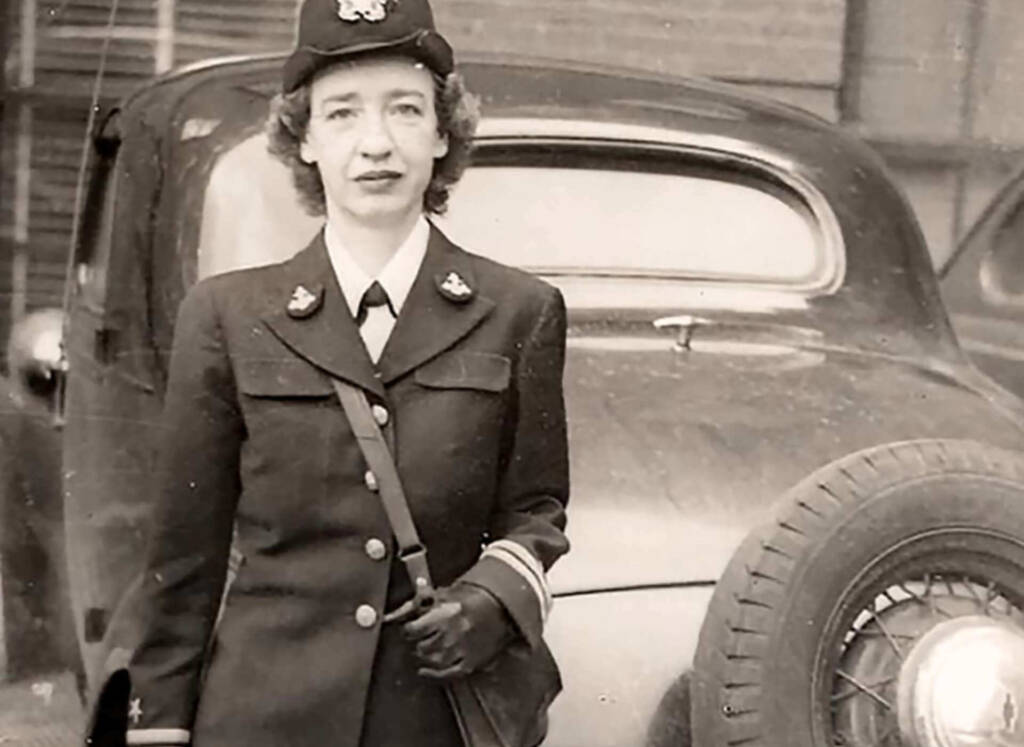
Grace Hopper was an American computer scientist, mathematician and Navy rear admiral whose work helped lay the foundation for modern programming. One of the first programmers of the Harvard Mark I computer, she wrote its initial operation manual and quickly became an advocate for making computers more accessible and user-friendly. Hopper pioneered the idea of machine-independent programming languages and developed early tools that directly influenced COBOL, one of the first high-level languages still used today.
Before her Navy career, Hopper earned a Ph.D. in mathematics from Yale and taught at Vassar. Over the decades, she became a celebrated figure in computing, receiving dozens of honorary degrees and major national honors. Her name now appears on a U.S. Navy destroyer and an NVIDIA superchip.
7. Alan Turing (1912–1954)
“We can only see a short distance ahead, but we can see plenty there that needs to be done.”
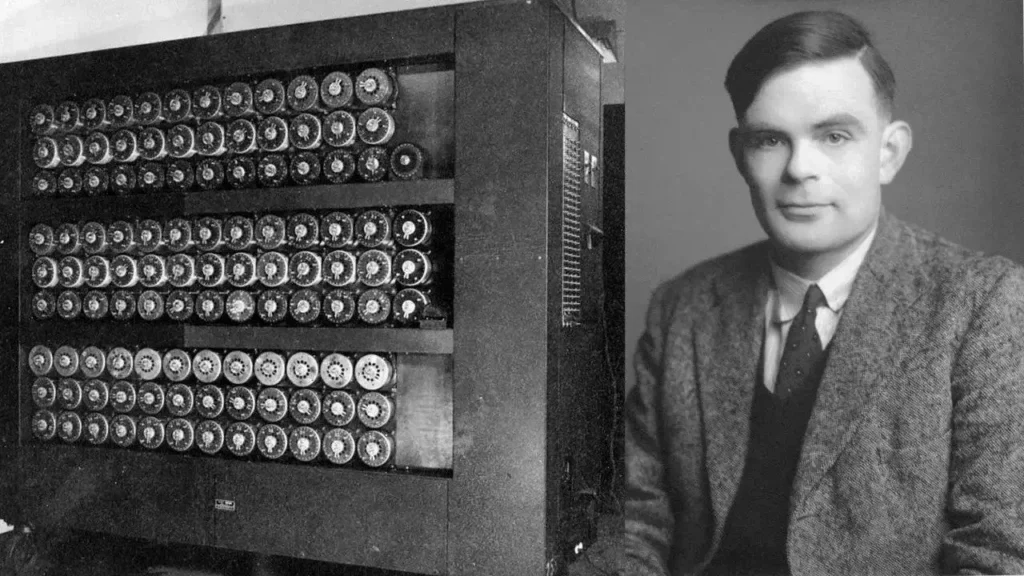
Alan Turing was an English mathematician, computer scientist and cryptanalyst whose ideas helped define the modern digital world. His concept of the Turing machine provided a formal model for algorithms and computation, earning him recognition as the father of theoretical computer science. Turing brought his analytical skill to Britain’s codebreaking efforts during World War II, leading the team that was instrumental in cracking German naval Enigma messages and shifting the course of the war.
After the war, Turing designed the Automatic Computing Engine and later contributed to early computer development. He also made influential contributions to the field of mathematical biology, including theories on morphogenesis and oscillating chemical reactions.
8. Mary Jackson (1921–2005)
“I plan to go on and do as much as I can for as long as I can.”
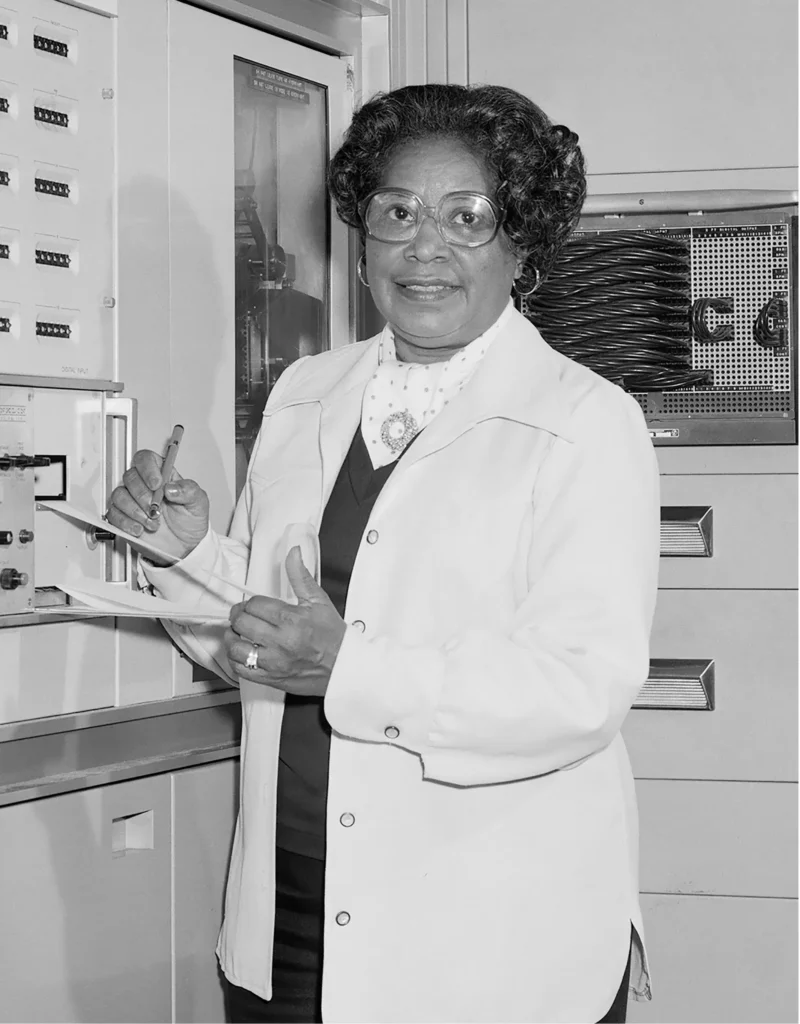
Mary Jackson was an American aerospace engineer whose career at the National Advisory Committee for Aeronautics (and later NASA) broke both scientific and social barriers. She started out as a “human computer” at Langley Research Center before becoming NASA’s first Black female engineer. Over 34 years, she advanced to the highest engineering rank available, contributing to aerodynamics research and complex flight experiments.
Realizing she could create greater change by supporting others, Jackson later transitioned into roles within NASA’s Equal Opportunity and Affirmative Action programs. There, she championed the hiring, training and promotion of women and underrepresented groups in STEM roles.
Her story gained widespread recognition through the book Hidden Figures: The American Dream and the Untold Story of the Black Women Who Helped Win the Space and its film adaptation.
9. Mae Jemison (b. 1956)
“I like to think of ideas as potential energy. They’re really wonderful, but nothing will happen until we risk putting them into action.”
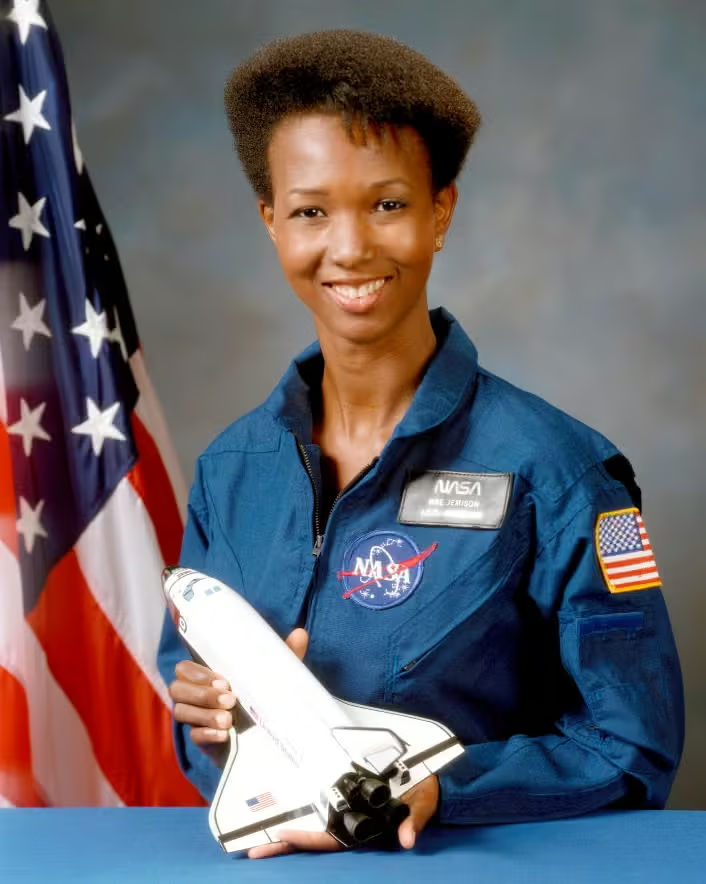
Mae Jemison is an American engineer, physician and former NASA astronaut who became the first African American woman in space. After earning degrees in chemical engineering and African and African American studies from Stanford (plus a medical degree from Cornell), Jemison served as a doctor with the Peace Corps before applying to NASA. Selected for the astronaut corps in 1987, she flew aboard the Space Shuttle Endeavour in 1992, spending nearly eight days in orbit as a mission specialist.
After leaving NASA, Jemison founded a technology research company and later launched the Dorothy Jemison Foundation for Excellence, a nonprofit focused on science education and long-term space exploration and led the 100 Year Starship Project. She is also the author of a series of science-based children’s books.
10. Ellen Ochoa (b. 1958)
“I hope to continue to inspire our nation’s youth to pursue careers in science, technology, engineering and math so they, too, may reach for the stars.”
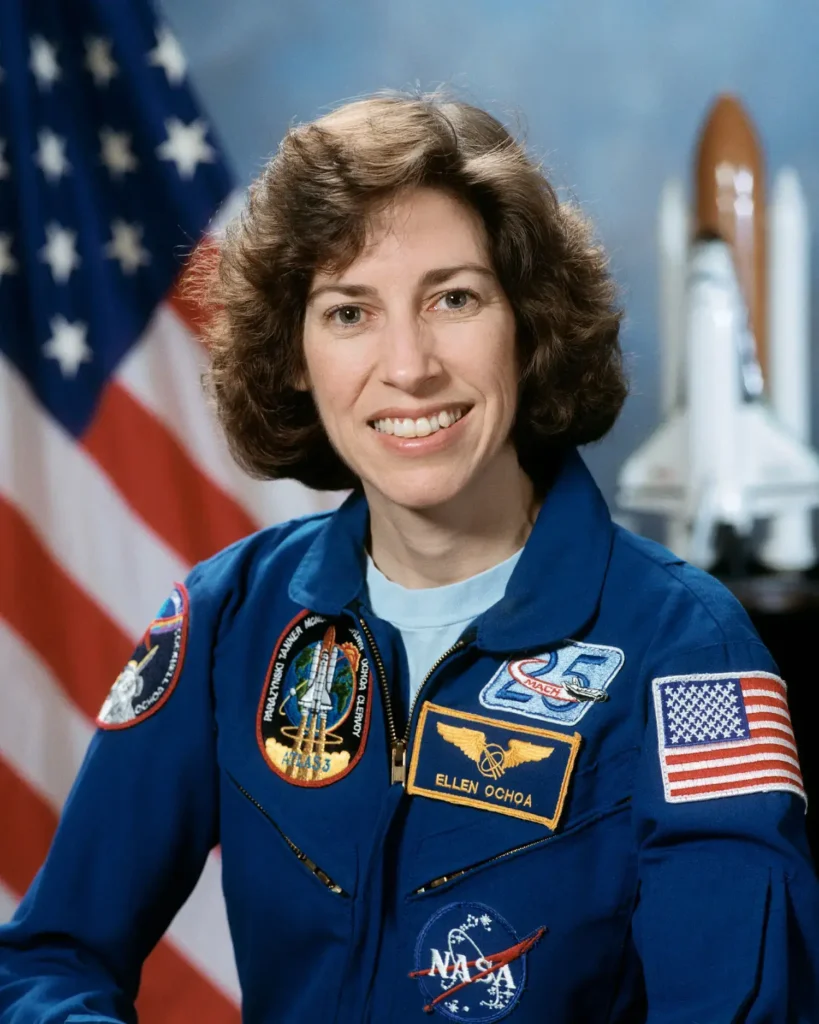
Ellen Ochoa is an engineer, inventor and former astronaut who became the first Hispanic woman in space. Before joining NASA’s astronaut corps, she earned a doctorate at Stanford and conducted influential research on optical systems. Her work led to three patents for optical inspection and pattern-recognition technologies used in manufacturing.
Selected as an astronaut in 1990, Ochoa flew four space shuttle missions between 1993 and 2002, logging nearly 1,000 hours in space and contributing to missions that studied Earth’s ozone layer and supported the early construction of the International Space Station. She later held several leadership roles within NASA, ultimately becoming the first Hispanic and second female director of Johnson Space Center.
11. Satya Nadella (b. 1967)
“The number one thing that you have to do as a leader: to bolster the confidence of the people you lead.”
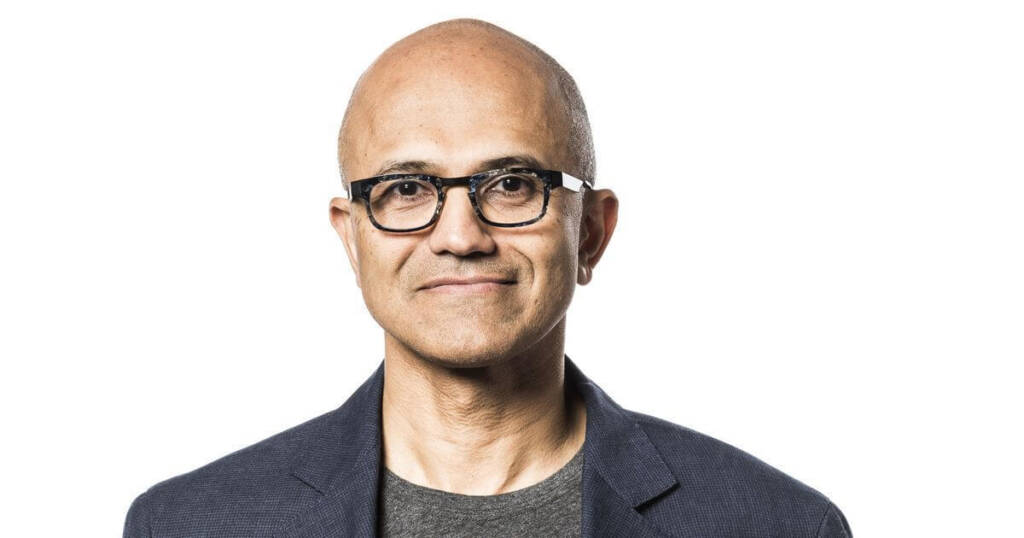
Satya Nadella is an engineer and technology leader best known for transforming Microsoft’s culture and strategic direction as CEO. Nadella joined Microsoft in 1992 and spent much of his early career leading engineering teams across different areas of the business. He later headed the company’s Cloud and Enterprise division, helping launch and scale Microsoft Azure.
Since becoming CEO in 2014, Nadella has overseen Microsoft’s shift to cloud computing, AI innovation and transformed the company’s corporate values to focus on continuous improvement and growth.
12. Fei-Fei Li (b.1976)
“I still believe the world is created by us. And whatever future world we envision or we want to live in is due to the work we do today.”
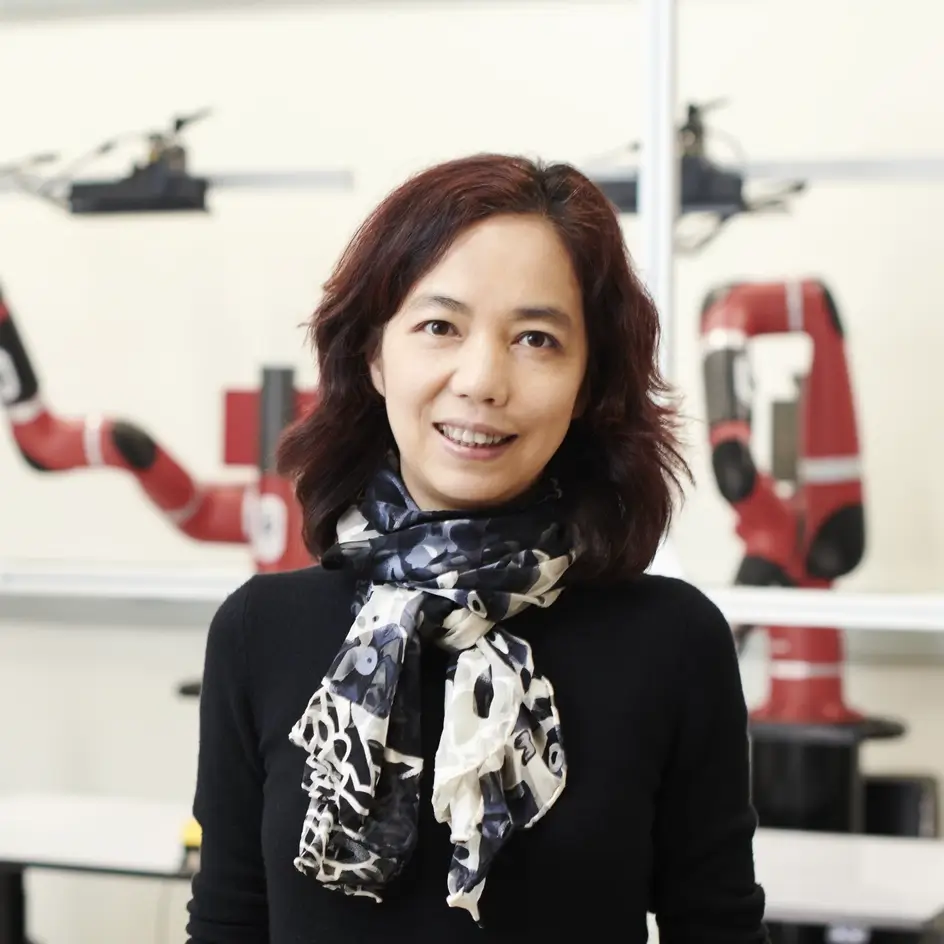
Fei-Fei Li is a Chinese-American computer scientist and AI pioneer whose work has been instrumental in shaping computer vision. She is best known for creating ImageNet, a large-scale visual database that accelerated breakthroughs in deep learning and AI. Li currently serves as the Sequoia Capital Professor of computer science at Stanford University and co-directs the Stanford Institute for Human-Centered Artificial Intelligence.
Committed to broadening participation in AI, she co-founded AI4ALL, an organization that promotes diversity and inclusion in the field. She also continues to explore the boundaries of what AI can achieve, including founding World Labs — a startup focused on developing spatial intelligence technology capable of understanding the three-dimensional world — in 2024.
Li’s notable recognitions include being named to Time’s list of the 100 most influential people in AI, appointed to the United Nations Scientific Advisory Board and elected a member of the National Academies of Engineering and Medicine and the American Academy of Arts and Sciences.
5 Top Engineering Thought Leaders
In addition to the individuals who have influenced engineering history, entire organizations also have a hand in shaping the field. The companies below represent some of the most innovative thought leaders today, pushing boundaries in robotics, infrastructure, AI, aerospace and advanced computing.
1. Boston Dynamics
Boston Dynamics is one of the world’s leading robotics companies, best known for developing highly agile robots, including Atlas, Spot and Stretch. Originally spun out of MIT, the company blends mechanical engineering, control systems, computer vision and AI to create machines that move in almost life-like ways. Their research and commercial robots continually redefine what dynamic locomotion looks like.
2. WSP
WSP is a global engineering and consulting firm specializing in areas including infrastructure, transportation, environmental engineering and sustainable development. With tens of thousands of engineers spread across dozens of countries worldwide, WSP advises governments, cities and major enterprises on designing resilient infrastructure — from transit systems and bridges to water resources and climate adaptation plans.
3. SpaceX
SpaceX has become one of the most influential aerospace companies in modern history, driving rapid advancements in rocket reusability, launch costs and deep-space ambitions. With vehicles such as Falcon 9, Falcon Heavy and the developing Starship system, SpaceX has dramatically expanded access to space for commercial, scientific and governmental missions.
4. IBM
IBM has been shaping the engineering and computing landscape for more than a century. From early mainframes to quantum computing and AI systems such as Watson, IBM continues to test the limits of what computational systems can achieve. Today, the company is a global leader in enterprise technology, hybrid cloud solutions and emerging quantum architectures.
5. Google DeepMind
DeepMind is one of the most advanced AI research labs in the world, known for landmark breakthroughs such as AlphaGo, AlphaFold and large-scale reinforcement learning systems. Their work has transformed fields ranging from protein folding to game strategy, demonstrating how machine learning can model, predict and solve problems once thought beyond computational reach.
How to Become a Leader in Engineering
Engineers don’t become leaders by accident. They become leaders as they master their technical skills, develop strategic thinking, refine their ability to communicate and exhibit a willingness to step into roles that stretch their comfort zones. Whether you’re early in your career or already managing projects and teams, the path to becoming an engineering leader is built on deliberate growth.
Here are the key steps you can take to move into an engineering leadership role:
- Strengthen both your technical and leadership skills: Great leaders have a deep understanding of the work and know how to guide others. Continue to develop your technical expertise, but also build skills in communication, decision-making, delegation and stakeholder management.
- Build a cross-disciplinary network: Leadership is collaborative. Engage with professionals in other focus areas, seek out mentors and look for opportunities to join multi-disciplinary projects. A broad network helps you see the bigger picture while opening doors for growth.
- Look for early leadership opportunities: You don’t need to have “manager” in your title to lead. Start by taking initiative — mentor junior teammates, volunteer to lead small portions of projects or coordinate cross-functional work. These experiences demonstrate your readiness for larger roles.
- Consider formal education to accelerate your path: Many engineers reach a point where technical expertise alone isn’t enough to move into senior leadership positions. Formal education — such as the University of San Diego’s Master of Science in Engineering Management and Leadership (MS-EML) — can provide structured training on how to become leaders who:
- Influence and lead flat, diverse and dynamic technology organizations
- Effectively manage complex customer and vendor interactions
- Succinctly communicate value to all stakeholders
- Define and implement innovative and creative strategies
- Develop and articulate comprehensive solutions to large scale business and technological challenges
Ready to make the transition from the technical track to a leadership role? Visit the program page to request more information about USD’s MS-EML program and download your free copy of our eBook: From Engineer to Leader: How to Transition from the Technical Track to Management Path.