In law enforcement, leadership begins long before the title. It is developed through preparation, discipline, self-awareness, service and the everyday choices that build credibility and trust—often well before a professional enters a promotional process. That conviction runs through every chapter of a new book from two University of San Diego faculty members and helps distinguish it as a practical, research-informed resource for public safety professionals at multiple stages of their careers.
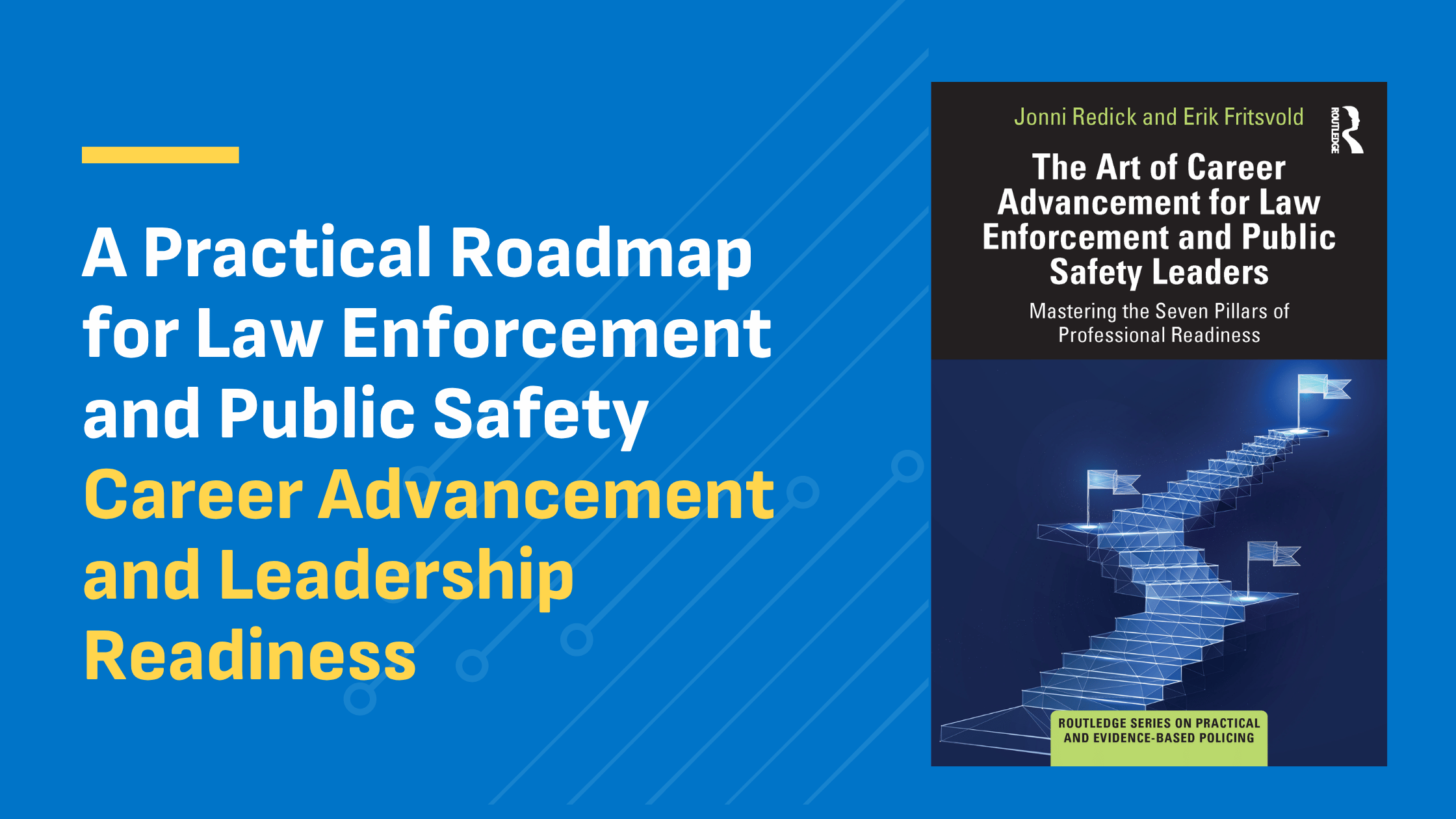
Dr. Erik Fritsvold, Academic Director of USD’s Master of Science in Law Enforcement and Public Safety Leadership (MS-LEPSL), and Dr. Jonni Redick, an MS-LEPSL adjunct faculty member and retired Assistant Chief of the California Highway Patrol, have co-authored The Art of Career Advancement for Law Enforcement and Public Safety Leaders: Mastering the Seven Pillars of Professional Readiness. Published through the Routledge Series on Practical and Evidence-Based Policing, the book draws on original research and decades of practitioner experience to give law enforcement and public safety professionals a practical framework for career advancement, professional readiness, and leadership development—before the promotion, through the promotional process, and into the leadership responsibilities that follow.
The problem the authors are solving is a real one. As they observe, “there is widespread dissatisfaction with leadership quality and effectiveness” in law enforcement, a condition that traces in part to the state of the promotional process itself. With more than 18,000 local police departments across the United States and no universal standard for how they operate or promote, many candidates are left to piece together their own path with little guidance and unequal access to the people who could help them.
The book provides a sequential, transparent playbook for navigating career advancement across law enforcement and public safety—helping professionals not only prepare for and earn the next opportunity, but also build the readiness, judgment, and leadership capacity required for the responsibility that follows. The authors’ focus is on preparing more professionals to lead well, invest in the development of others, and strengthen their organizations.
Dr. Redick frames the book’s arc simply: “Leadership before the title. Readiness before and for the promotion. Stewardship after it.”
Key Topics in Law Enforcement Career Advancement and Professional Readiness
The Art of Career Advancement moves through an introduction and seven chapters, each addressing a distinct phase of professional development. Key topics include:
- Why leadership readiness must start well before a promotional process opens — and what the research shows about what separates genuinely promotable professionals from those who are simply eligible, and how professionals can build the competencies, experience, judgement and self-awareness needed for greater responsibility
- How to conduct an honest assessment of your own readiness for promotion and close the gaps you find
- How to build a meaningful career development plan using SMART goals, strategic networking, and the right combination of mentors, sponsors and coaches
- The SHARPEN framework: a practical approach for developing the skills your next role requires and building the professional visibility that puts you on decision-makers’ radar
- What written examinations, assessment centers and oral boards actually measure — and what they don’t — along with preparation strategies and study timelines for each stage of the law enforcement promotion process
- How civil service systems and organizational context shape promotional opportunities across agencies, and how professionals can better understand and prepare within those systems
- The Five Ps framework — People, Policy, Processes, Practices and Possibilities — for helping newly promoted and experienced leaders assess responsibilities, make informed decisions and align leadership practice with organizational needs.
- How to build relational trust and psychological safety across a team, and why both are preconditions for lasting organizational performance
- Legacy thinking as a leadership discipline: what it means to lead in a way that strengthens your agency long after your tenure ends, leaving the organization better prepared for the future.
Throughout each chapter, Concept Bootcamp boxes provide short, digestible summaries of key concepts from leadership theory, policing models, organizational behavior, community relations and contemporary issues — the evidence base behind each recommendation, written to be used, not just read.
Voices from the Field boxes share perspectives from more than a thousand law enforcement and public safety professionals from across the country who have navigated the promotional process and the leadership challenges that follow it. These direct quotes and contributions from the field add a depth of practical insight that research alone cannot provide.
What Law Enforcement Leaders Are Saying About the Book
The book has already drawn endorsements from respected professionals across the field.
“The Art of Career Advancement is the resource our profession has been missing. Jonni and Erik deliver a transparent roadmap ensuring quality people reach leadership, not just the well-connected. A must read if you want to successfully climb the ladder.”
Jason P. Armstrong
Chief (ret.), Ferguson Police Department
National Law Enforcement Officer Hall of Fame
“This book captures the art of the oral interview by translating key leadership and policing concepts into practical guidance, preparing candidates to stand out, perform with confidence, and secure their place at the table.”
Julie Rodriguez
Captain, Los Angeles Police Department
Past President, National Association of Women Law Enforcement Executives (NAWLEE)
“What stands out in Art of Career Advancement is how personally Redick and Fritsvold address the challenges of promotion and growth. They bring clarity to complex promotional systems while encouraging intentional career advancement, helping readers feel understood and prepared to move forward.”
Dr. Tarrick McGuire
Chief, Alexandria Police Department
How to Buy the Book
The Art of Career Advancement for Law Enforcement and Public Safety Leaders: Mastering the Seven Pillars of Professional Readiness by Dr. Jonni Redick and Dr. Erik Fritsvold is available for pre-order now.
Order ON Routledge
order from Amazon
About the Authors
 Jonni Redick is a retired Assistant Chief of the California Highway Patrol, where she advanced through the ranks over 29 years from entry level to executive leadership. Her work reflects deep expertise in organizational leadership, workforce development, public safety strategy and culture change, grounded in her practitioner experience. Redick is a published author, contributor to national policing publications, speaker and consultant specializing in leadership development, career advancement and building resilient, people-centered organizations. She holds an MS in Law Enforcement and Public Safety Leadership from the University of San Diego, where she serves as an adjunct faculty member, and a Doctor of Education in Organizational Change and Administration from California Baptist University.
 Erik Fritsvold serves as Academic Director of the Master of Science in Law Enforcement and Public Safety Leadership program at the University of San Diego. He was the founding faculty member for the program and part of the team that developed it from concept through launch, a process that included three years of research and collaboration with law enforcement. Fritsvold oversees all aspects of program academics, including curriculum, faculty, admissions, accreditation and student matters. His primary expertise is applying core tenets of academic criminology and criminal justice to modern-day law enforcement challenges. He earned his BA in Sociology from the University of San Diego in 2000, and his MA and PhD from the Criminology, Law and Society Department at the University of California, Irvine in 2003 and 2006, respectively.
Frequently Asked Questions
Is this book only for sworn law enforcement?
Law enforcement provides the primary context for the book, but its leadership-development and career-readiness principles extend across the broader public safety profession, including sworn and professional staff, correctional officers and others outside traditional policing who are developing their careers and leadership capacity. It can also serve as a resource for academy instructors, trainers, HR professionals, command staff responsible for team development, and students in criminal justice, criminology, public safety, leadership, and related academic programs learning about law enforcement and public safety leadership.
How does this book help with the law enforcement promotion process, including written exams, oral boards and assessment centers?
The book addresses each stage directly and in practical terms. It covers what candidates can expect at written examinations, assessment centers and oral interview boards, along with preparation strategies, study timelines and techniques for each format. Because promotion processes vary significantly across agencies, the guidance is written to apply regardless of how your agency structures its process. The book also places promotional preparation within the larger context of professional readiness, helping readers understand not only how to prepare for the assessment process, but what leadership competencies they are being asked to demonstrate.
Is this book useful for someone who is already in command, not just preparing for a promotion?
Yes. The book covers the full arc of a leadership career, not just the path to the first promotion. The later sections address relational leadership, building trust across a team, legacy thinking and long-term organizational stewardship. These are topics that are just as relevant to experienced supervisors, managers, command staff, and executives as they are to professionals preparing for their first supervisory role.
Can agencies use this book for internal leadership development or training programs?
That is one of the uses the authors specifically had in mind. The Concept Bootcamp sections are well suited to training environments, supervisory academies and professional development programs, and the full book works as a structured development resource alongside individual study.
Who are the contributors who make up the Voices from the Field advice?
The Voices from the Field component draws on insights from roughly 1,500 law enforcement and public safety professionals across the United States. The group spans nearly every rank and role in public safety. About 18 percent serve as chiefs, assistant chiefs, sheriffs or undersheriffs; captains and commanders (19.5 percent), lieutenants (18.5 percent) and sergeants (17 percent) are also well represented. Nearly 75 percent bring at least 20 years of professional experience, and they come from agencies of every size, from small-town departments to large metropolitan agencies and specialized public safety organizations.