
Roughly 70% of digital transformation efforts fall short of their goals, and that figure makes one point clear: New technology does not create progress on its own. Organizations see stronger results when they shape a strategy first, then use that strategy to guide tools, workflows and data practices. When leaders take the time to align those pieces, teams have a clearer sense of purpose, and the work moves forward with fewer setbacks.
Digital transformation involves reshaping how an organization works so it can respond to new demands and make better use of technology and data. Organizations with strong IT leadership that approach this shift with intention tend to adapt more effectively, while those without a clear plan often struggle to gain traction.
This guide explains how transformation takes shape when the work follows a clear strategy. It highlights the elements that help leaders turn technology into steady progress and outlines the skills that matter for professionals who want to play a larger role in these efforts. For aspiring IT leaders, this context supports stronger decision making and opens the path to greater influence within an organization.
| What You’ll Learn | |
| – How a digital transformation strategy creates structure and direction, helping teams focus on outcomes rather than isolated tools – A repeatable set of steps you can use to shape a transformation plan that aligns with business goals | – How a fictional company applies these steps, including the decisions leaders weigh and the tradeoffs they face – Practical ways to handle common barriers such as resistance to change, budget limits, legacy systems and talent gaps |
What Is a Digital Transformation Strategy?
A digital transformation strategy is a roadmap that explains how an organization plans to use digital tools, data and process improvements to reach defined business goals. It guides decisions, sets priorities and aligns teams around a clear direction for change.
Why Having a Digital Transformation Strategy Matters
McKinsey describes digital transformation as a fundamental rewiring of how an organization operates, so it can deploy technology at scale and create lasting value. Its 2025 State of AI report found that 88% of organizations now use AI in at least one business function, yet only about one-third have managed to scale those efforts across the enterprise.
With that level of activity, a strategy helps leaders focus on the areas where technology can produce real gains instead of scattering resources across disconnected projects. That same McKinsey report found that organizations seeing measurable financial returns from AI are three times more likely to target transformative change and consistently redesign workflows rather than simply layering new tools onto existing processes. These outcomes appear more consistently when a strategy shapes the work rather than when teams adopt tools without a clear direction.
Digital Adoption vs. Transformation
Digital adoption brings in new tools and may improve specific tasks, but it does not reshape how the organization functions. Transformation reaches further. It influences workflows, communication, decision making and how responsibilities shift as processes become more connected. These broader changes require coordination and a strategy keeps that coordination intact so improvements move forward in a steady and unified way.
| Digital Adoption | Digital Transformation |
| – New tools – Task-level efficiency – Limited process change | – Redesigned workflows – Data-driven decisions – Organization-wide change |
7 Steps to Create a Digital Transformation Strategy
A strong digital transformation plan gives leaders a clear sequence of actions that keeps teams focused and aligned. The steps below form a practical framework that organizations can adapt to their size, pace and goals. For aspiring IT leaders, these steps reflect the type of structured thinking and cross-team coordination expected in roles that influence technology decisions.
Step 1. Align the Effort With Business Goals
Transformation succeeds when it supports a clear business need. Leaders should confirm the goals driving the work, the organizational priorities connected to those goals and the constraints that may shape early decisions. Clear goals make it easier to connect technology choices to measurable performance.
Questions to consider:
What problem or opportunity needs attention first?
Which outcomes matter most for the organization this year and next?
How will technology support those outcomes?
Step 2. Secure Leadership Approval and Sponsorship
Transformation requires consistent direction from leaders who understand the purpose of the effort and can reinforce that purpose across the organization. Sponsorship refers to the leader who owns the initiative at the executive level. This support helps remove obstacles, allocate resources and maintain momentum.
Questions to consider:
Who will champion the work?
How will progress be communicated to other leaders?
What support will teams need during early stages?
Step 3. Assess the Current State
Leaders need a clear view of people, processes and technology before planning the next phase. That assessment should explore how work moves through the organization, where gaps appear and which systems limit growth or efficiency.
Checklist:
Current workflows and handoffs
Existing tools and integration points
Skills available within teams
Pain points that slow decision making or service delivery
Step 4. Define Success Metrics
Success needs to be measurable. Metrics give teams a target, show whether the work is on track and help leaders adjust when needed. Metrics may relate to cost, speed, quality or customer experience.
Questions to consider:
What indicators show progress or risk?
Which metrics will teams track weekly or monthly?
How will leaders evaluate impact across departments?
Step 5. Engage Experienced Partners
Many organizations work with partners or vendors to bring in expertise, accelerate planning or support implementation. Strong partners help fill skills gaps, improve integration planning and introduce best practices that shorten timelines.
Checklist:
Experience in similar environments
Clarity on scope and responsibilities
Alignment with internal teams and project goals
Step 6. Measure Results and Adapt
Transformation is not a one-time effort. Teams should review performance regularly, compare results to planned metrics and adjust as needed. Small iterations keep momentum steady and reduce the risk of large, disruptive corrections later.
Questions to consider:
What feedback are teams seeing from early pilots?
Which adjustments can improve adoption or performance?
How will changes be documented and shared?
Step 7. Plan for Scaling
Once initial improvements take hold, leaders can extend the work to other departments or sites. Scaling requires strong communication, repeatable processes and clear guidance on how new teams will adopt the changes.
Checklist:
Processes that can be standardized
Resources needed for broader rollout
Roles responsible for training and support
Case Study: Acme Manufacturing’s Digital Transformation Plan
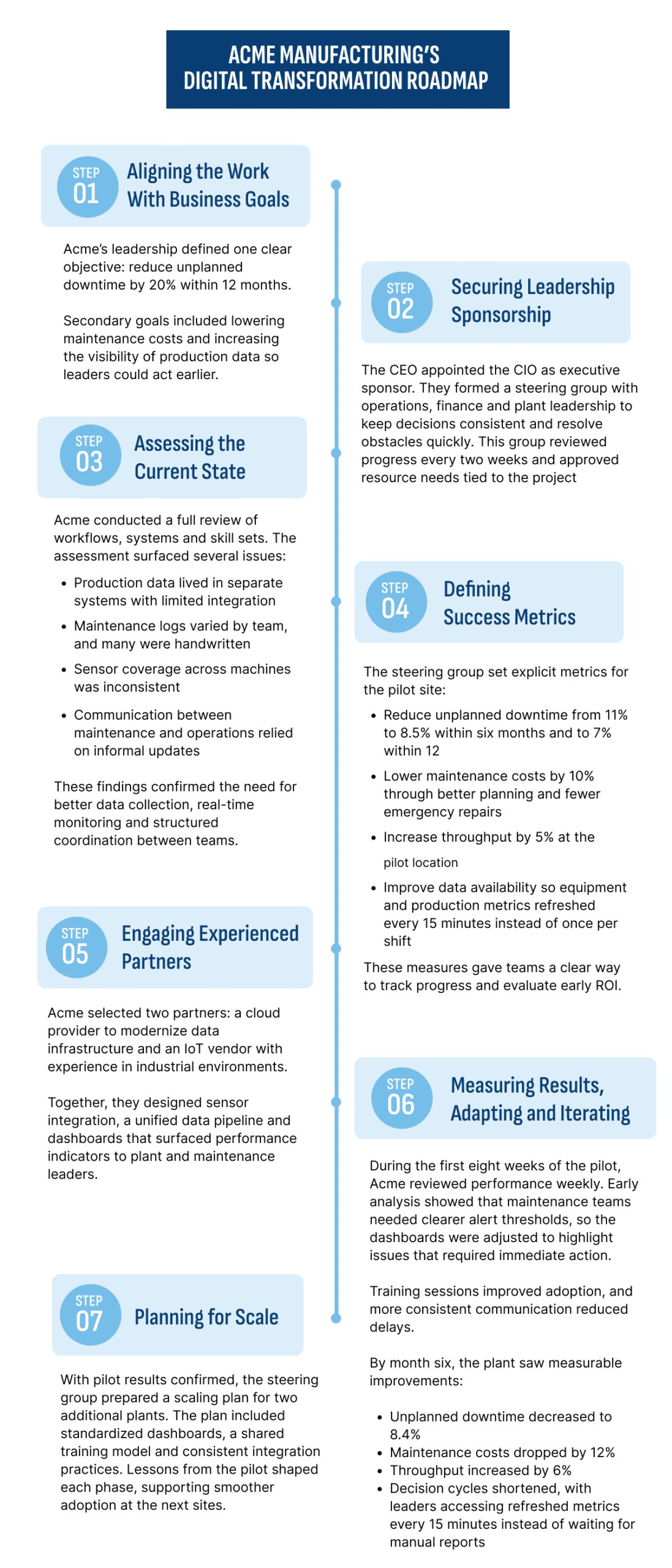
The following scenario is fictional and created for instructional purposes. It illustrates how a manufacturing organization could apply the seven-step framework outlined earlier to plan and execute a digital transformation effort.
Acme Manufacturing, a mid-sized producer of industrial components, faced rising production delays and inconsistent equipment performance across its primary plant. Unplanned downtime had climbed to nearly 11%, and maintenance decisions depended on manual logs that varied in accuracy. Leadership recognized that improving reliability and decision speed would strengthen margins and support future growth. This prompted a structured digital transformation effort grounded in the steps outlined earlier.
4 Common Digital Transformation Challenges
Even well-planned transformation efforts face obstacles that can slow progress or limit results. The challenges below are some of the most common, along with practical steps leaders can take to manage each one.
1. Resistance to Change
Transformation often shifts responsibilities, workflows and long-standing habits. Without clear communication and visible support from leadership, teams may hesitate to adopt new practices.
How effective IT leaders address it:
Explain why the effort matters and how it supports business goals
Provide training that builds confidence with new tools and processes
Give teams space to raise concerns and adjust implementation plans when needed
2. Budget Constraints and ROI Skepticism
Leaders may question the cost of new systems or doubt that early gains will offset the investment. This can slow decision making or reduce the scope of planned improvements.
How effective IT leaders address it:
Tie each investment to a specific outcome or metric
Use pilots to confirm early value before scaling
Share results with leadership regularly to reinforce momentum
3. Integration Issues With Legacy Systems
Older systems may not communicate well with new platforms. This can limit data visibility or create workflow bottlenecks that disrupt progress.
How effective IT leaders address it:
Map current systems and integration points early
Prioritize upgrades that support data consistency and reliability
Work with partners who have experience in similar environments
4. Talent Gaps
Transformation often requires skills in areas such as cloud architecture, data management or process redesign. Limited expertise slows implementation and affects quality.
How effective IT leaders address it:
Identify skills that matter most for the planned work
Provide internal training to upskill current teams
Bring in targeted support from experienced partners while internal teams grow
Frequently asked questions
What are the seven pillars of digital transformation?
While models vary, many frameworks include these core areas: strategy, leadership alignment, talent, process redesign, data management, technology modernization and continuous improvement. Each area supports coordinated change across the organization.
What is a digital transformation plan?
A digital transformation plan outlines how an organization will use digital tools, data and process improvements to reach defined business goals. It summarizes objectives, success metrics, implementation steps, timelines and resource needs.
What is an example of a digital transformation?
A common example is the move from manual maintenance logs to sensor-driven monitoring in manufacturing. Real-time data replaces paper records, teams gain earlier insight into equipment issues and leaders can make faster, more accurate decisions.
What is the first step in digital transformation?
Most efforts begin by confirming the business goals the work should support. Clear goals guide decisions, shape priorities and help leaders define the scope of the effort.
How do you lead a digital transformation strategy?
Leaders set direction, align teams around goals, remove obstacles and track measurable progress. They also support training, encourage collaboration across departments and ensure decisions reinforce the organization’s long-term objectives.
What skills are needed for digital transformation?
Leaders benefit from strong communication, project planning, analysis and change-management skills. Technical understanding of data, cloud environments or automation tools helps, but the ability to coordinate people and processes is equally important.
Connecting Strategy, Technology and Leadership
Digital transformation works best when it is driven by clear goals, reliable data and strong leadership. Technology plays an important role, but the direction behind that technology is what determines long-term results. Organizations need leaders who can guide teams through workflow changes, communicate purpose and measure progress in a consistent way.
For readers interested in shaping this kind of work, strategic and technical leadership skills matter. The Master of Science in Information Technology Leadership (MS-ITL) program at the University of San Diego builds those capabilities through coursework that covers system-level thinking, communication, analysis and decision support. Graduates learn how to coordinate people, processes and technology so transformation efforts move forward with clarity and purpose.
Explore the MS-ITL program to learn how this degree can support your next step.